From a substantial and delightful heritage-style timber home of 20 odd years in Australia, to an ocean-going sailing catamaran roaming the southwestern Pacific Ocean for the previous seven years, Heather and I stepped out of those particular boxes into our next abode, which sat precariously but adventurously on four wheels. A desire to spend our early retirement years travelling and sightseeing the US had led us gingerly but excitedly into the well-established world of motorhomes, fifth wheels and recreational vehicles in general. After drifting around the periphery of the RVing lifestyle on several previous trips to the US and knowing our inherent, native Australian desire for travel and adventure, we were easily ‘bitten’ by this particular ‘bug’. Standing that very first time in a brand new fifth wheel at a Colorado Springs RV show back in 2006, I slipped unresisting into a world of daydreams, meandering through The Grand Canyon, Route 66, Florida, Alaska and never once stopping to take off my rose colored spectacles. A nudge from my wife had brought me back to reality and to the questions of how, when and, of course, finances. But that’s another story and one, perhaps, for a ‘history’ page!

We had chosen the Holiday Rambler Savoy for several reasons…I like to think it was a fairly profound choice, as we had to satisfy several of our desires.
My wife had the good sense to limit the size, which eventually grew from 30ft to 34 ft. We didn’t want the fifth wheel to be a weight burden on the truck, which might struggle with its load for the next two or three years.
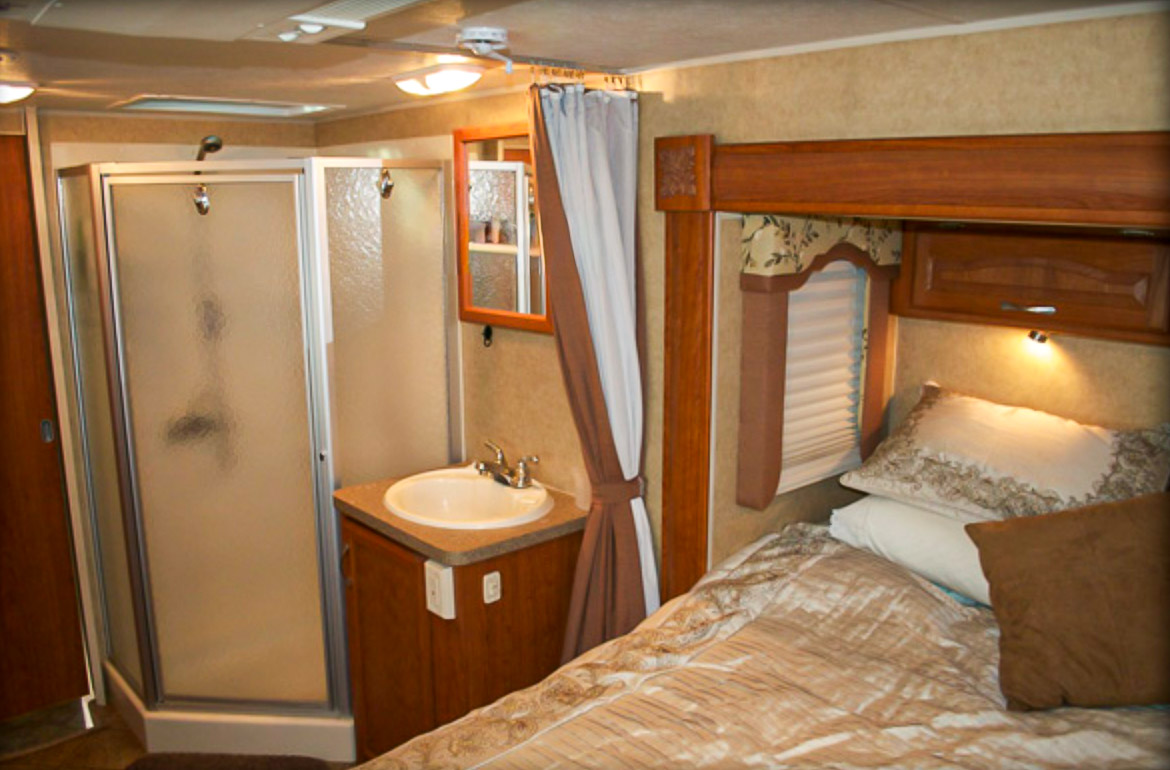
Heather also wanted a bedroom whose bed went sideways across the coach within its own slideout. That desire provided much more closet space with sliding mirrored doors and drawers. The large mirrors also have an enhancing visual effect on the perceived space.
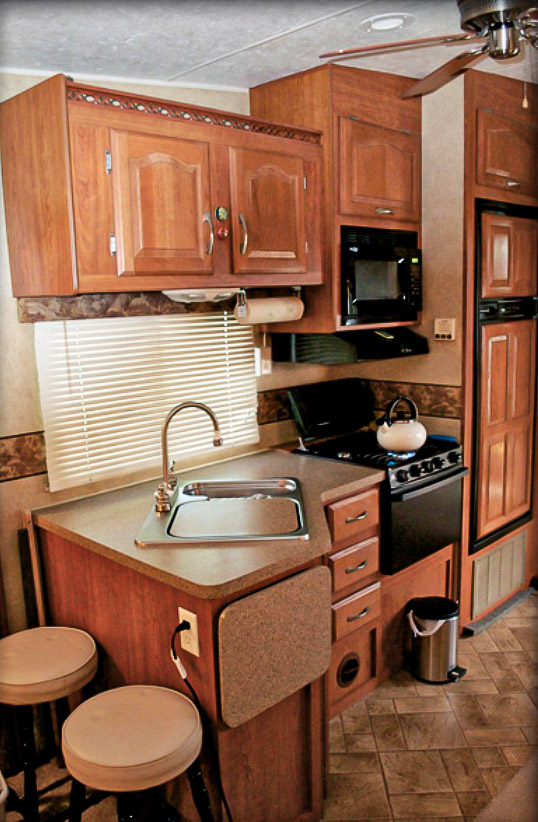
Heather had also taken a great liking to the larger space offered by a rear kitchen floor plan, but that desire gave way to a centrally located, slightly smaller kitchen plan to accommodate other layout considerations.
That smaller kitchen had, over the initial few weeks of ownership, proved somewhat inadequate for full-time living, but we had plans for minor improvements to the layout.
Having spent two years on fairly intensive research, we had a better idea of the models, floor plans, and prices. Seven years of living on our catamaran had given us a good understanding of how much space we would need.
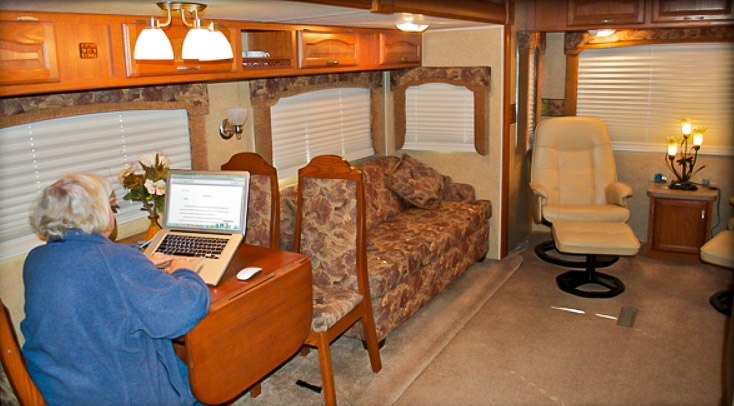
As a writer and author of several books, Heather could not be without her laptop or the necessary sitting comfort of several hours a day in front of its screen.
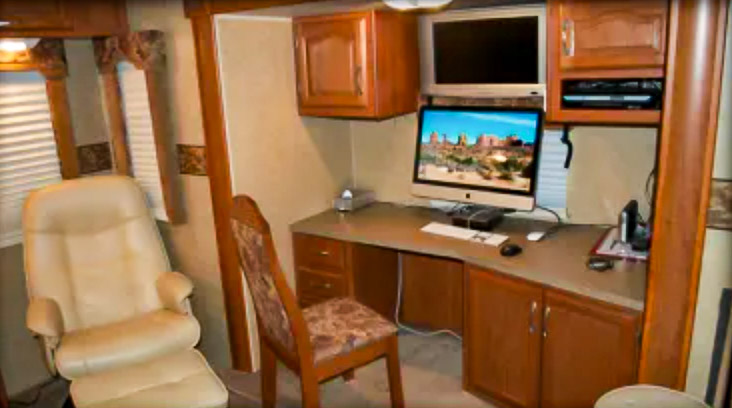
I also enjoyed my own fairly constant interaction with a computer whose much larger 27″ screen needed a more permanent setup. For this and several other reasons, we needed a more permanent office desk space.
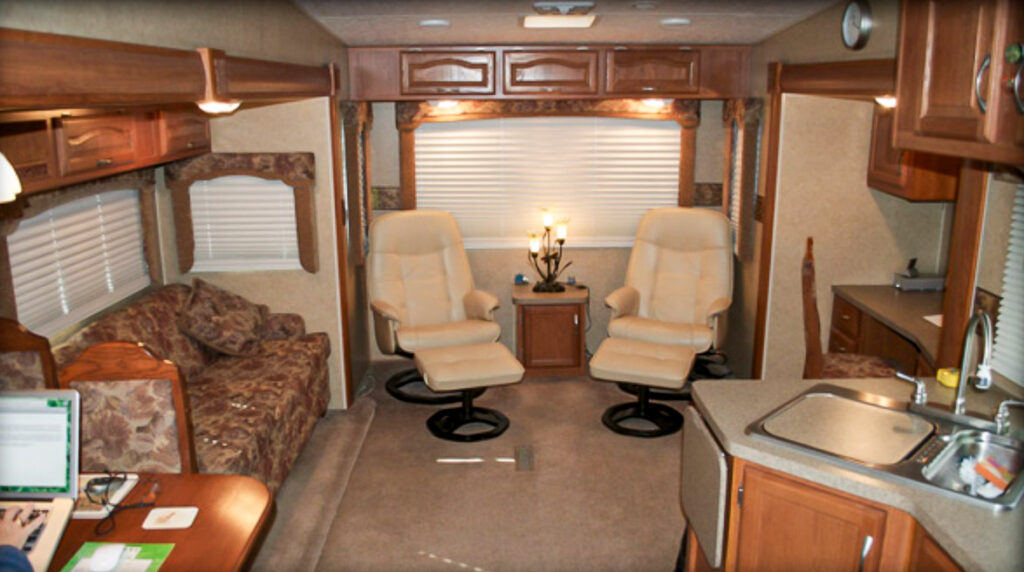
During my research into 5th wheels of various vintages, I concluded that the most space for a given length was achieved with a floor plan featuring two slideouts on opposite sides at the rear of the coach. This gave a very open living space of 14 feet from wall to wall within the slideout area, with plenty of walking space between the fixed furniture.
I really liked the cream leather Euro chairs with their matching Ottoman stools. Heather wanted a table and four chairs rather than a dinette-style dining area. Our other requirement was to be able to use the kitchen/dining area and also the bedroom on those infrequent occasions when it was neither convenient nor even possible to run the slides out.
Some clever designing on the part of Holiday Rambler gave us almost all of our desires in the form of their Savoy 34ft model….well done, guys!
“Now we needed a big truck!”
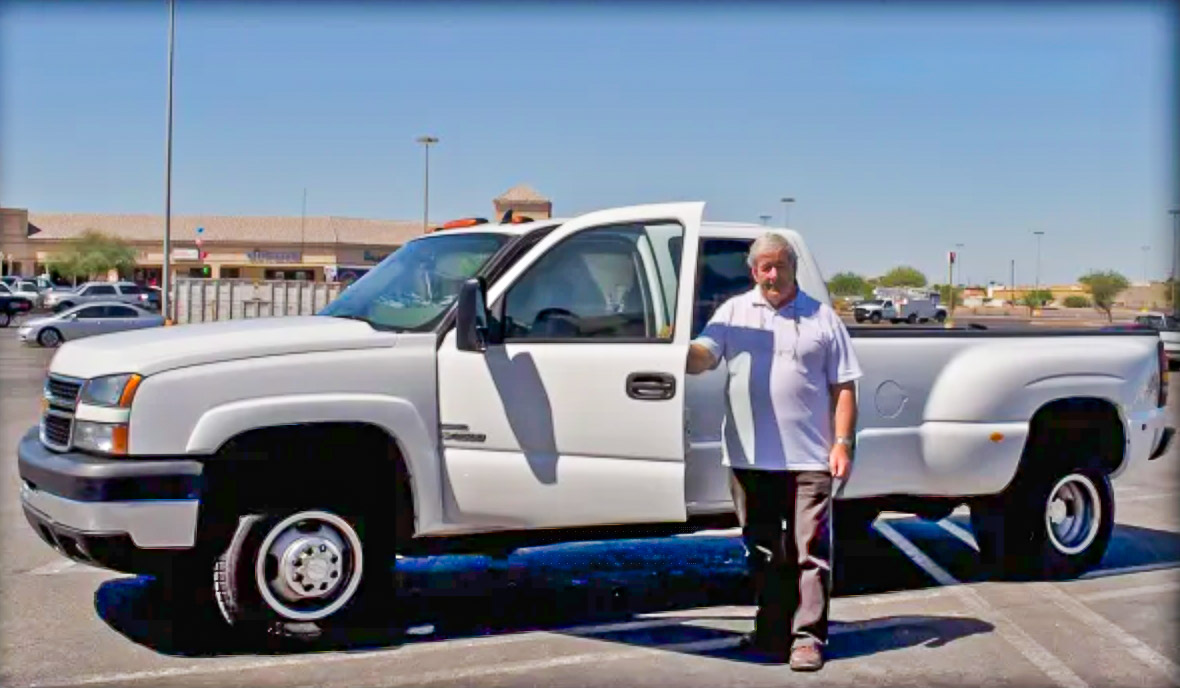
The ‘Beast’ was a 4-year-old, 6.6-litre, Dual rear wheel Chevrolet Silverado
“This is a page I’m dedicating to my fellow ‘Petrol (Hmmm diesel) Heads’ who love their trucks with an unadulterated passion”.
Extreme comfort to me is the full leather interior, heated front seats that move electrically in eight directions, a high-quality Bose sound system, separate heating and air-conditioning zones for the driver and front passenger, and, especially, the elevated driving view above one’s fellow road users. I’m sure some of you will say, “Hmm. That’s all fairly normal.” But, from an Aussie’s perspective, these were all ‘top of the line’ extras to which I, for one, had not been overly exposed.
“Trucks are trucks?….. Yeah, right, mate!”
Do you ever wonder what determines things like style, layout, colours, etc., when the big three (or four) truck manufacturers prepare their offerings for the year ahead? How much of their planning and design is just change for the sake of change, and how much is just being blasé because of the brand-loyalty factor that keeps customers coming back?
And what do we, as the buying public, expect of those manufacturers at the launch of their latest range? Bombarded with the latest ‘gimmickry’, it’s sometimes hard to judge what might be really useful and innovative, or is it so ‘ho hum’ that they shroud their displays with ‘offerings’ from the bikini brigade.
With the above thoughts in mind, it would be easy to shrug off even mild progress with throwaway lines like “Trucks are trucks”, but to such banter I could only say, “Yeah, right mate.” (Australian sarcasm which implies total rejection of the comment). I propose that American trucks are both mature in design and superb in their multi-purpose capabilities.
When I think of the Allison Transmission in my four-year-old beast, I must say I have never driven anything so exquisitely tuned for hauling a medium load like a fifth-wheel RV. I could choose between six speed automatic or six speed manual which was great for those long downhills….press the ‘Tow/Haul’ button in the end of the same lever and the freewheeling auto changed to a mild engine brake….if I shifted to manual (M) and touched the brakes, the Allison would kick back a gear and slow me a little more substantially….touch the brakes again and another gear change occurs….smart? I’ll say!
“When we bought the vehicle, everyone kept saying “Allison, the best gearbox out there”. I heard this all the time, so I believed it! You have to understand that I, as a newbie to these vehicles, knew no better”. “My time behind the wheel of a British fire truck many years previously was of little value within this new experience, except perhaps that I had a reasonable understanding of driving a heavy load, albeit usually in a hurry”.
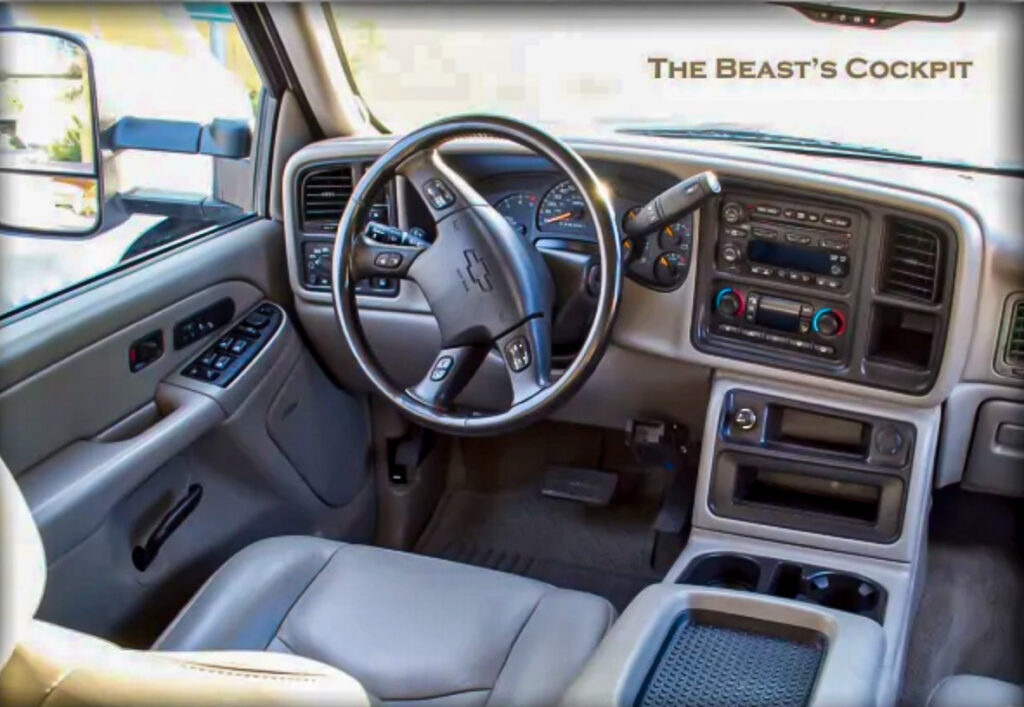

Passengers enjoyed a good level of comfort, too, but without the heated seats. The back of the front centre console was adorned with dual radio controls and headphone sockets, as well as heating control, a 12v socket and a drinks holder.
No passengers? The seats could move forward to become a flat, padded luggage area. One could also sleep there, given a comfy single bed mattress.
So I’d climbed into my warmed leather seat, pressed a small button that moved the seat into my predetermined driving position, checked the view in my extra-large rear-view towing mirrors, and I was ready for anything… well, almost!
Two heavy-duty batteries crank the big 6.6-ltr diesel into life as myriad dash lights display the engine’s state of well-being. The electronic information panel below the speedometer provided another bunch of data with parameters I could control….like how I want the vehicle to lock its doors – did I want the lights to flash when I locked up and a dozen other (really useful?) minor controls……
When I was on the road with the fifth wheel hanging on for grim death or just obediently following my every move, I truthfully hardly knew it was there. Except for the occasional undulation in the road surface, I had to give added credit for that driving experience to the high quality of the American highways. Generally, they have two lanes each way, long acceleration lanes for oncoming traffic, and good signage for everything, including services… yes, an excellent road system.
Whilst I got used to that new driving experience (America), I’d slip the cruise control into play at 60 mph and settle into the right-hand lane for my journey. I found this really good for a couple of reasons, one was that the fuel consumption stayed around 12/13 mpg, and the other was that my fellow road users were always passing me, and therefore I was hardly ever touching the brakes or changing lanes to pass someone! I’d draw my feet back off the pedals, drop my armrests, and enjoy the scenery… which was why Heather and I came on this journey in the first place.
Colorado Springs nestles in the foothills of the Rocky Mountains in Colorado. Not far away, Denver, 60-odd miles to the north, shares a similar topography. As such, both cities are subject to mountain weather, with occasional blizzards or snowstorms and temperatures that often crash below zero. On the Fahrenheit scale, 32 degrees is freezing, so anything below 0 is incredibly cold. Both Denver and the Springs also boast being a mile or more above sea level, and as such, they both enjoy winds that could create a chill factor that only Polar Bears could raise a smile.

As we sat in Colorado Springs waiting for our adventures to begin, the winter was closing in. We had wanted to cross the Rockies along Interstate 70, but that Highway reaches altitudes of more than 9,000 feet as it skirts close by the well-known ski resorts of Vale and Breckenridge. In those areas, the i70 passes through freezing tunnels and features 1 in 6 ascents and long descents, which sometimes struck fear into the hearts of seasoned truckies. These roads are the ‘arteries’ of the country’s transport system, and ‘the show must go on’ …well, at least until the state authorities close the mountain roads due to ice and snow. For the truckies at least, it is illegal not to carry chains for their tyres on certain roads….As I said, “The show must go on”.
On the other side of the Rockies was a ‘carrot’ that encouraged us to make this mildly foolhardy journey. The small tourist town of Moab nestles in a quiet valley between Arches National Park, Canyonlands National Park and the La Sal mountain range, which also has a snow line and snow-capped peaks in winter.
Moab itself is nothing special beyond most tourist towns, but its proximity to several incredibly beautiful national and state parks is what draws thousands of visitors each year.
And so it was that we found our weather break and set off from Colorado Springs, heading North on Interstate 25 towards Denver. Our fifth wheel was properly set up, equipped and stocked, ready for our life on the road.

Our timidity with our new rig, the icy roads, and the many steep inclines and declines on this journey had led us to seek a halfway stop. We chose the small town of Rifle because there was a Walmart Superstore close to the highway. Many Walmart Stores allow overnight RV parking in their back parking blocks, and there are no parking fees.
The photo above was taken at the westbound exit of a very long tunnel, and immediately ahead of us was a six-mile-long, fairly steep decline with ice and snow everywhere. Even the truckies were pulling over before descending. We were at around 9000 ft in elevation, so I deduced that the bottom of this next ‘hill’ would be less icy and we should push on. Within about one mile, the roads were clear of snow, and the going became easier. However, the Rockies are a big place, and there were many more hillclimbs and descents in front of us.
I mentioned previously that the Silverado had a fantastic ‘Allison’ gearbox. I was slowly learning to use it the way it was designed. My initial ‘white knuckles’ and dry mouth subsided, and I had come to really appreciate the truck.
48 hours later, after a freezing cold night in Rifle, we had finally pulled into our RV park under the mountains around Moab in Utah.
We had chosen the Okay RV Park, which was on the southern outskirts of Moab, more precisely on Spanish Valley Drive. When we booked in, they asked us whether we were members of Passport America. Our blank look quickly conveyed to the receptionist that we didn’t. They went on to explain that, as Passport America members, we would be entitled to a 50% discount on many RV park rates… theirs included.
The park quickly signed us up for a $44.00 joining fee, which we subsequently saved by booking a three-night stay at their park. As we ended up staying another six nights, also at the 50% reduced rate, we were well in front financially. Upon signing up, we were given the Passport America camping directory, which lists more than 1,700 RV sites across America, Canada, and Mexico.
Moab lived up to its reputation and proved to be a really exciting place to stay. We visited several national parks, which were amazing to explore and, as a photographer, gave me endless views and scenery to photograph.
Arches National Park has more than 2,000 sandstone arches within its 119-square-mile area. Originally designated as a National Monument on April 12, 1929. It was redesignated as a National Park on November 12, 1971.
Canyonlands National Park is much larger, at more than 520 square miles, and it welcomed more than 400,000 visitors in 2008. The Colorado River, as well as the Green River, meander slowly through its many canyons, creating wild, barren landscapes of incredible beauty. Our 10-day visit was too short, but the Colorado Plateau, which rises above the states of Colorado, Utah, Arizona, and New Mexico, is a must-visit.
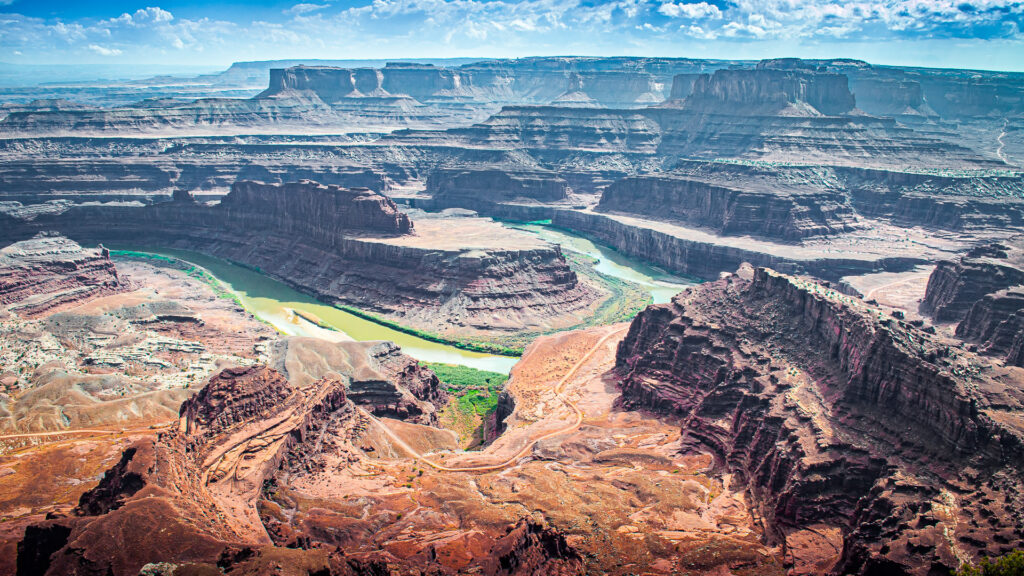
Dead Horse Point State Park is much smaller but has more incredibly rugged beauty akin to this whole area. In the photo below, the Colorado River is nearly 2000ft below.

We arrived in Alamogordo, New Mexico, ten days prior, having driven through the Lincoln National Forest and over the Sacramento Mountains, which rise to over 9000ft. We stopped for a break in the beautiful and historic mountain village of Cloudcroft to admire the view over the valley 6,000 ft below. In the hazy distance, on the far side of the valley, we could see what we thought was either snow or low cloud (as seen in the picture above). For the next 18 miles, we drove down a very steep, winding descent that carried us quickly to the valley floor and into Alamogordo.
The valley floor, or Tularosa Basin, shares its topography with the stunning White Sands Desert Monument, Holloman Air Force Base, and the nearby White Sands Missile Range. With spectacular mountains on three sides, you can imagine what a stunning area of New Mexico we had found.
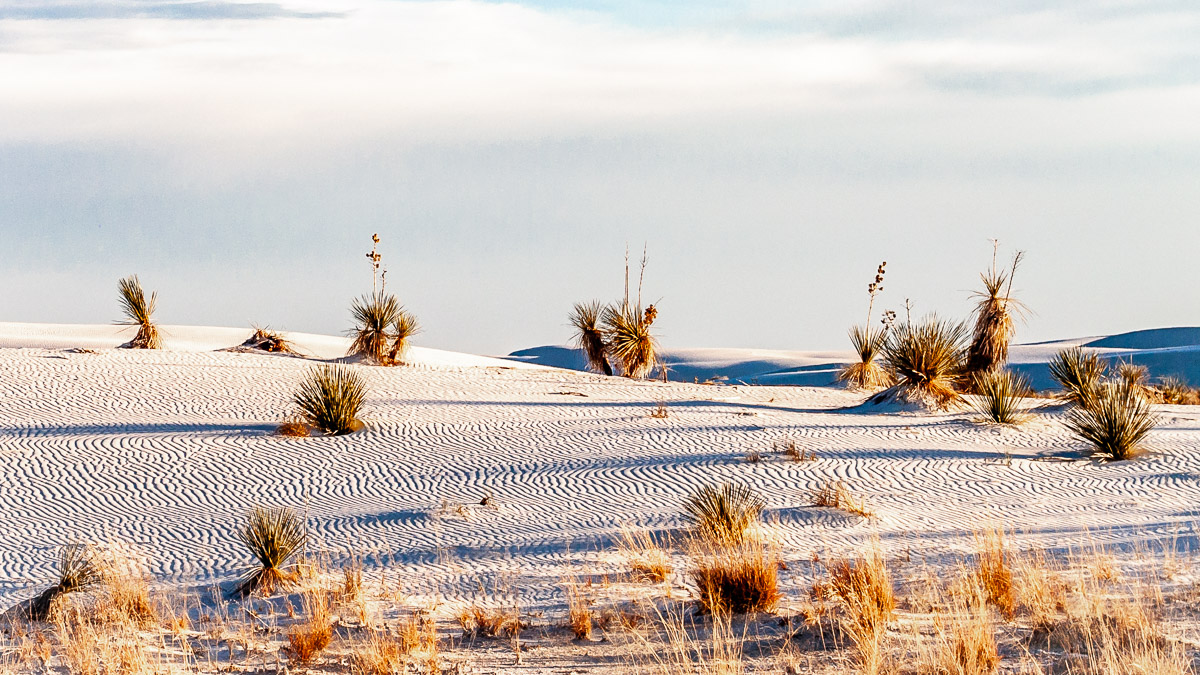
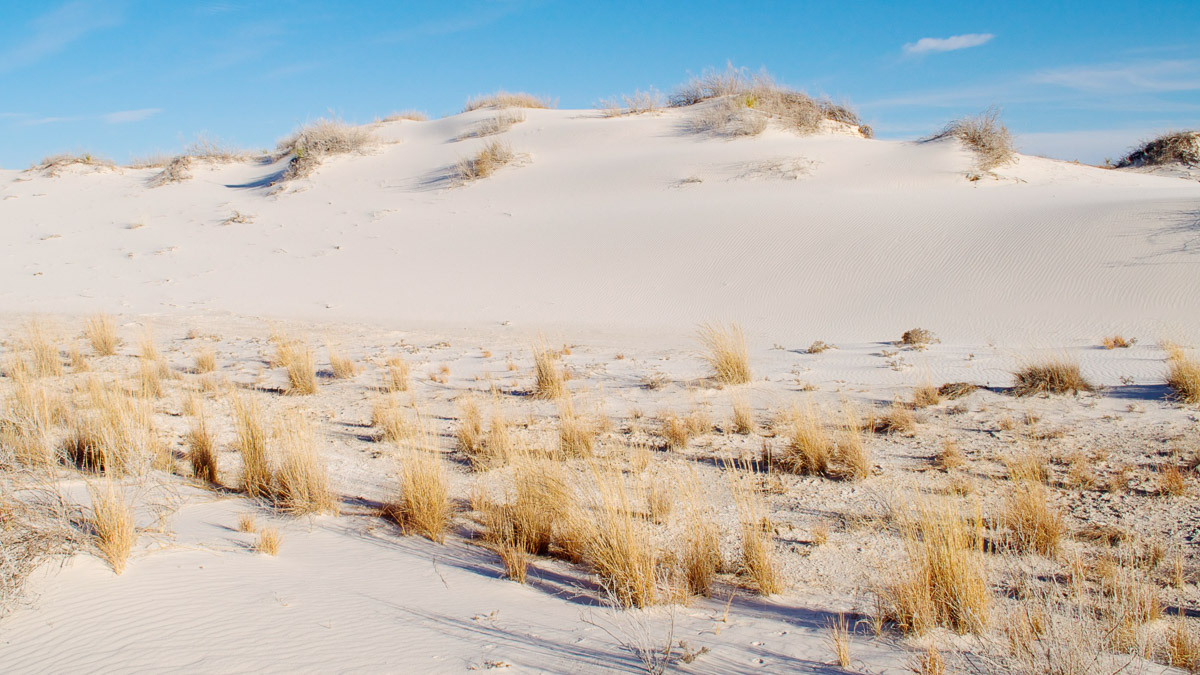
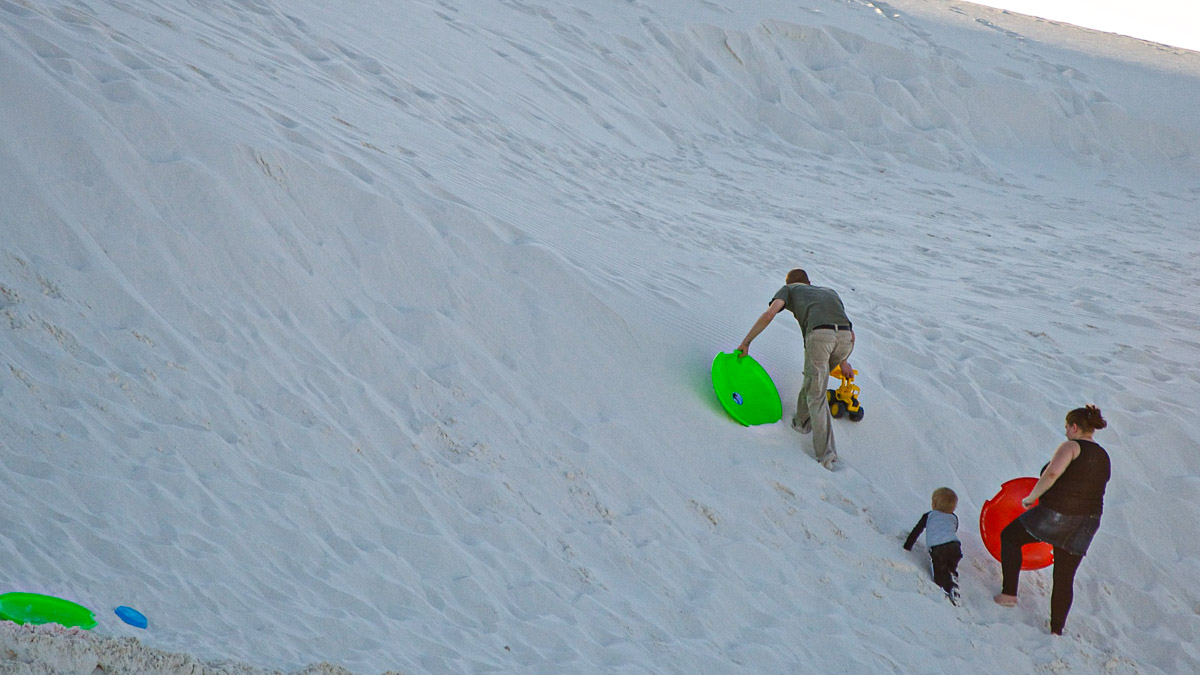
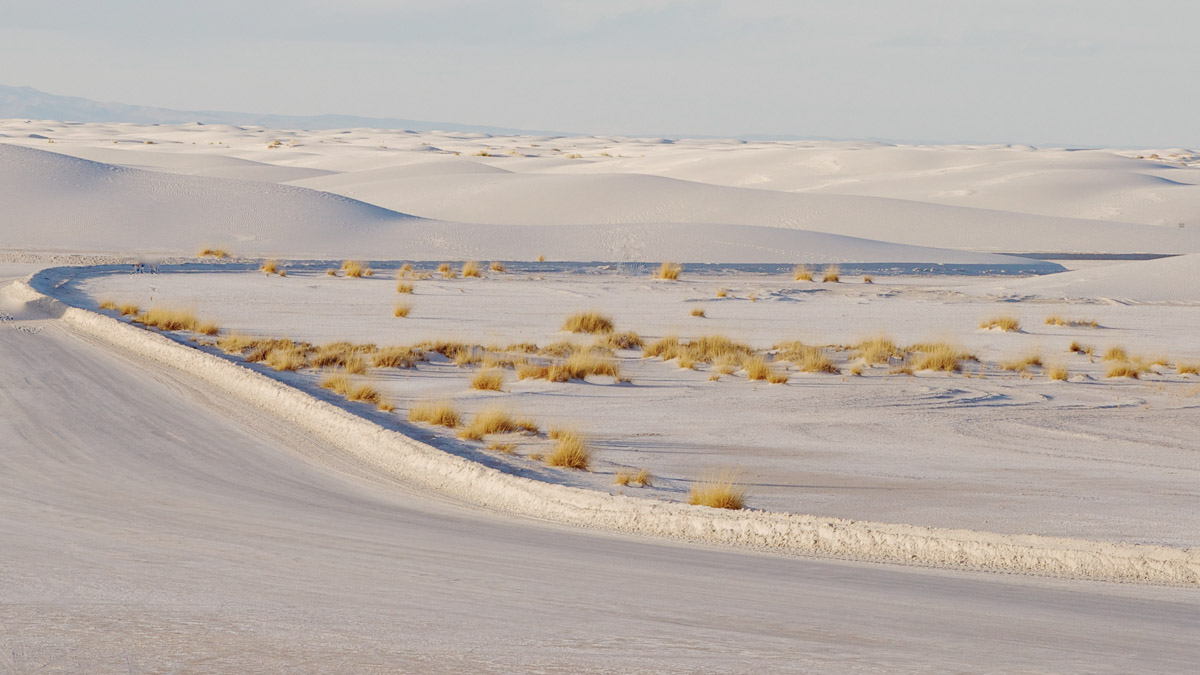
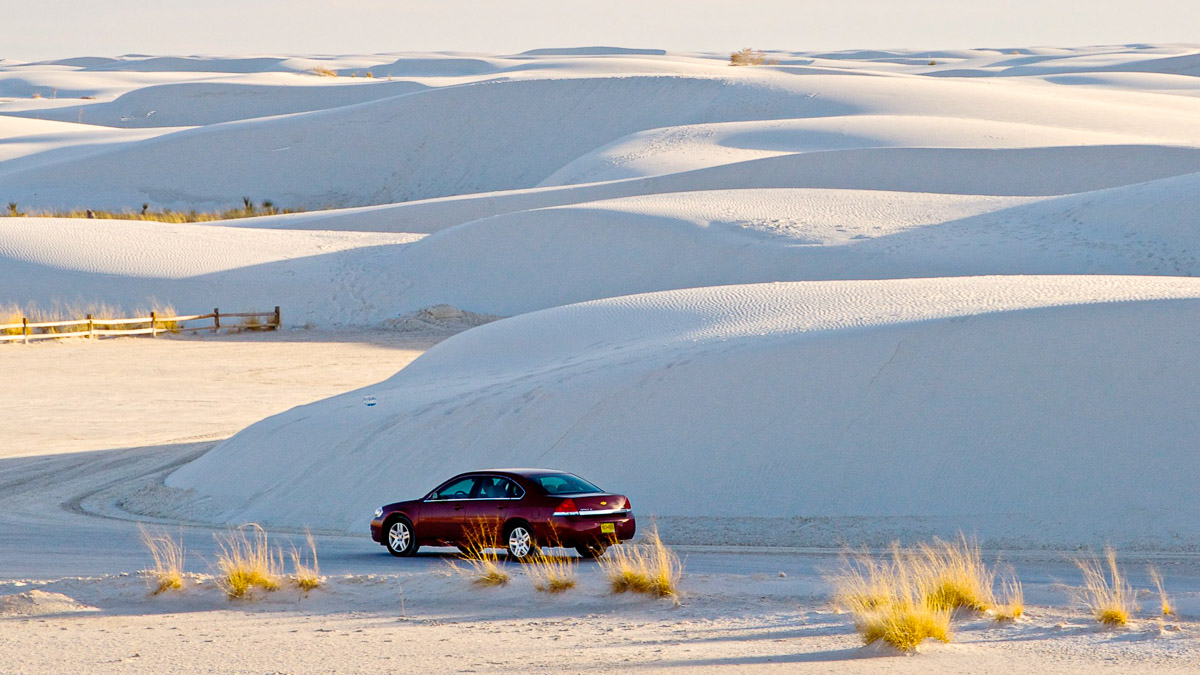
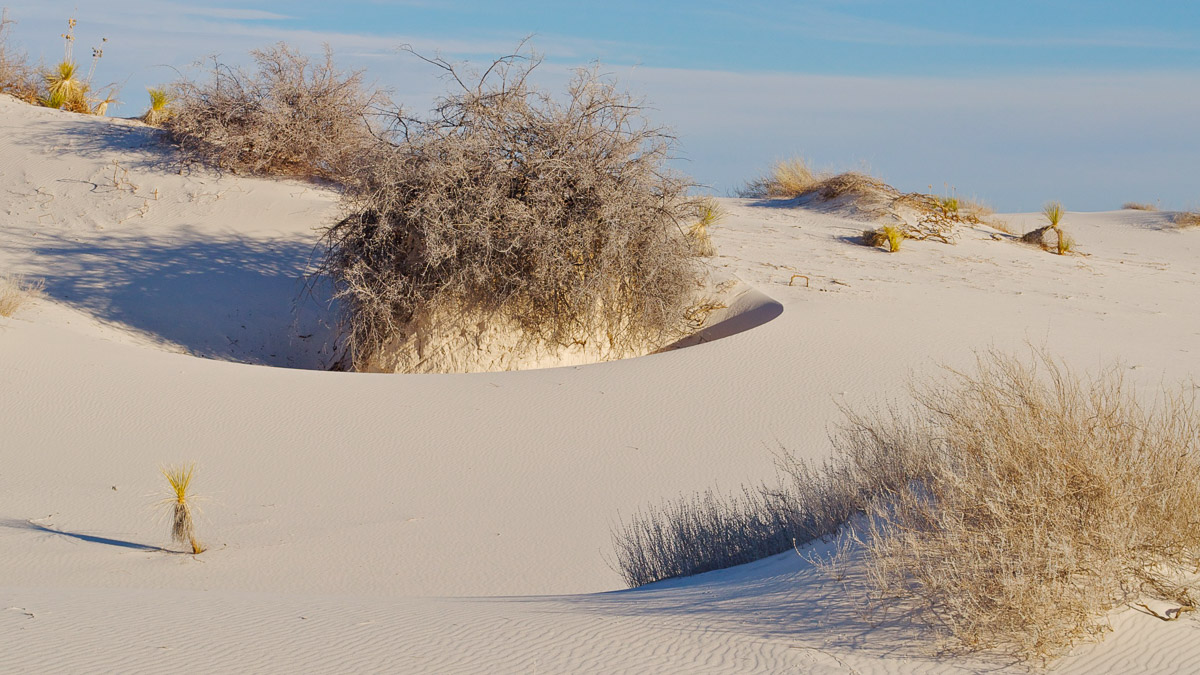
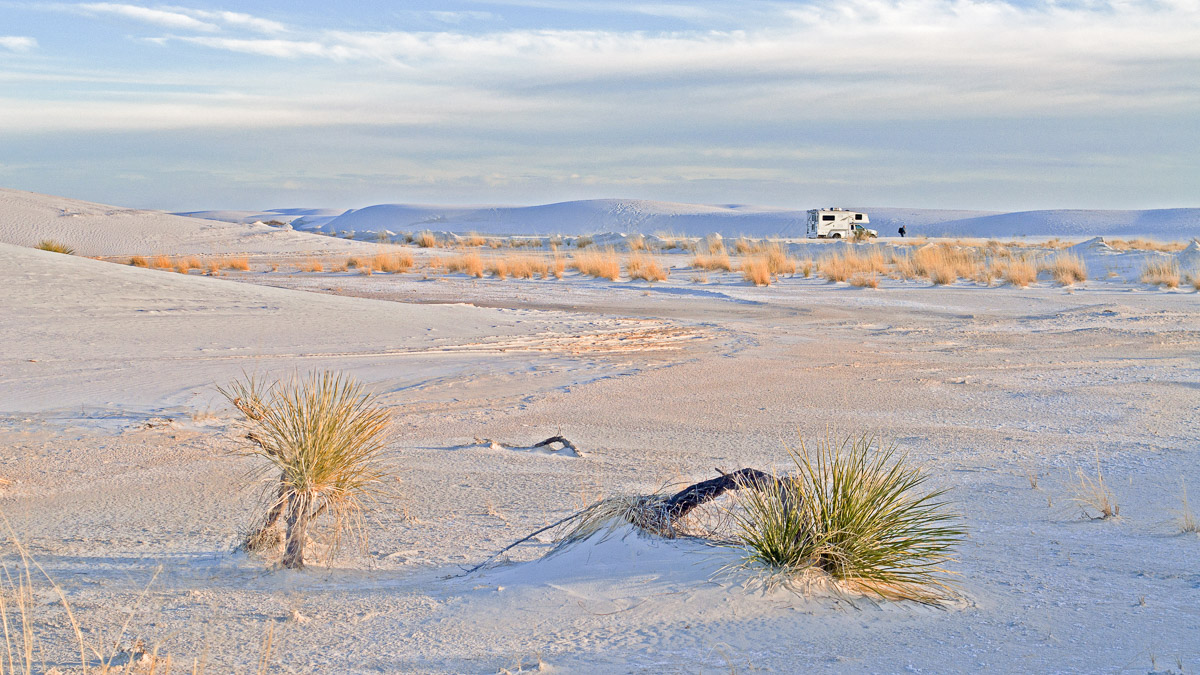
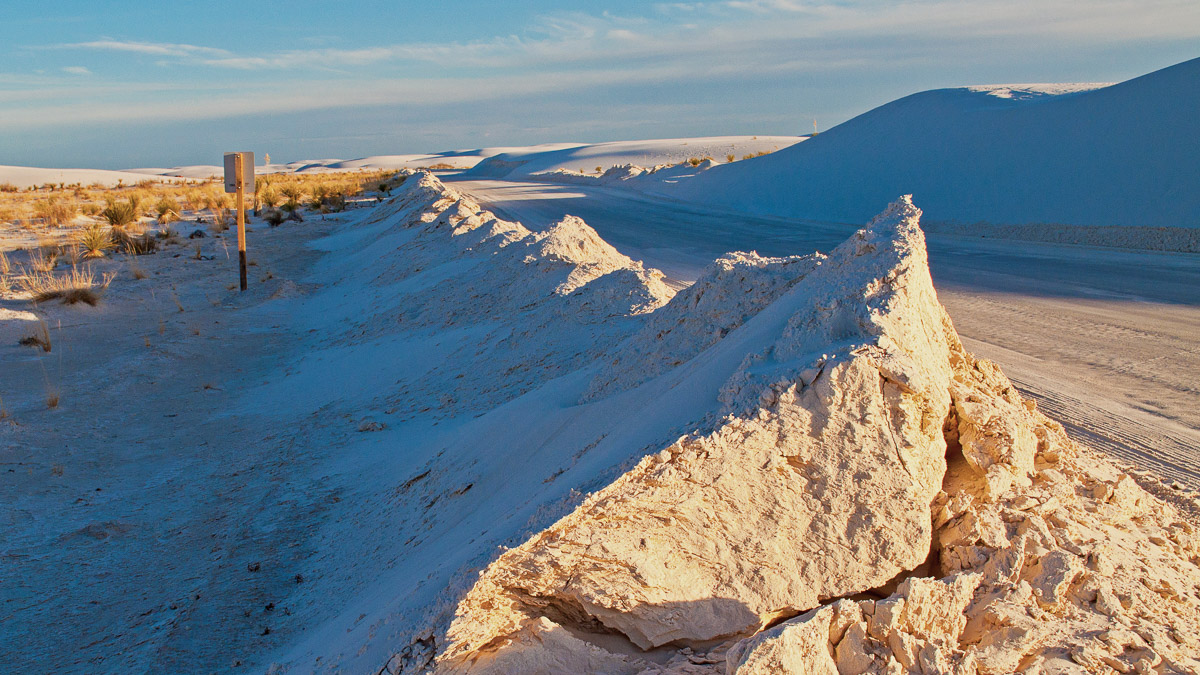
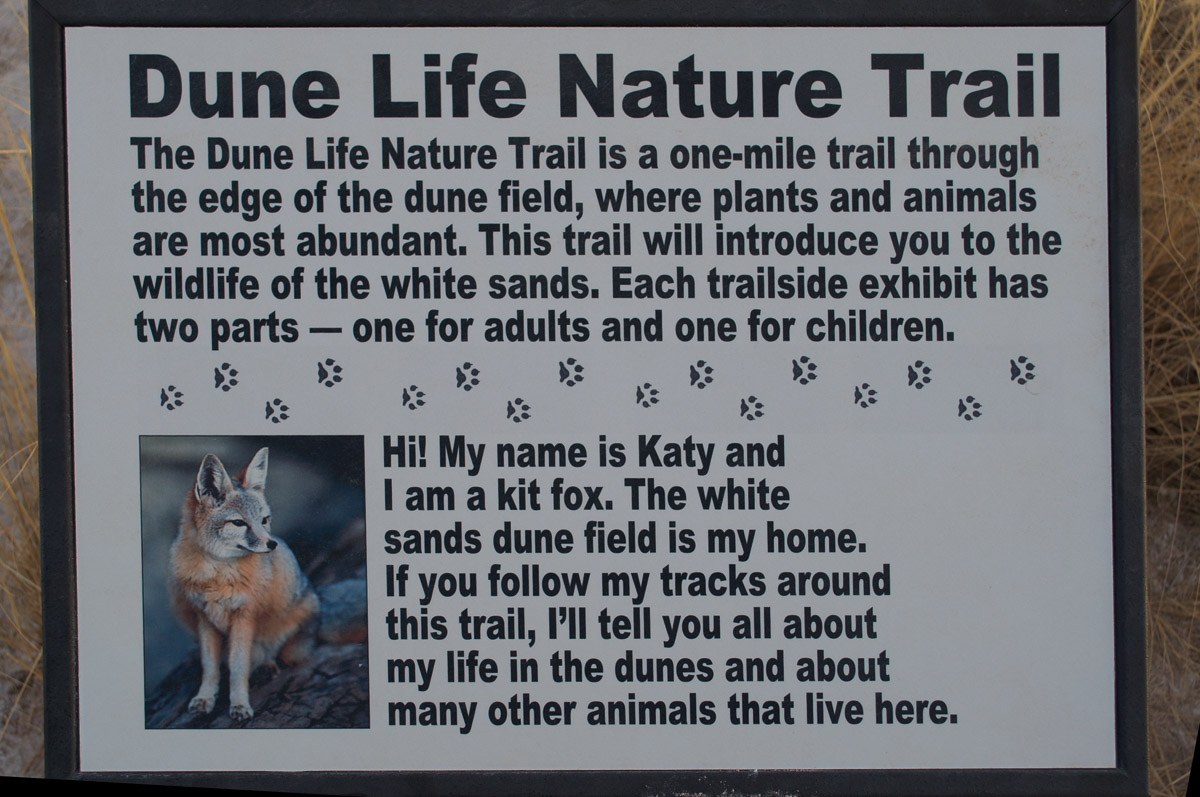
The snow or low cloud we had seen from the top of the mountains was, in fact, desert dunes, which are made up of nearly 300 square miles of finely ground gypsum. As the White Sands National Monument, it has been developed as a tourist facility and boasts a magnificent Visitor Centre, boardwalks up onto the dunes, and a paved road that carries visitors around 17 miles through the dunes. Picnic spots and rest areas abound, and the Ranger-led tours really broaden visitors’ knowledge. For me, a photography jaunt just before dusk resulted in some ‘golden-hour’ pictures, which I have included in a short slide show below.
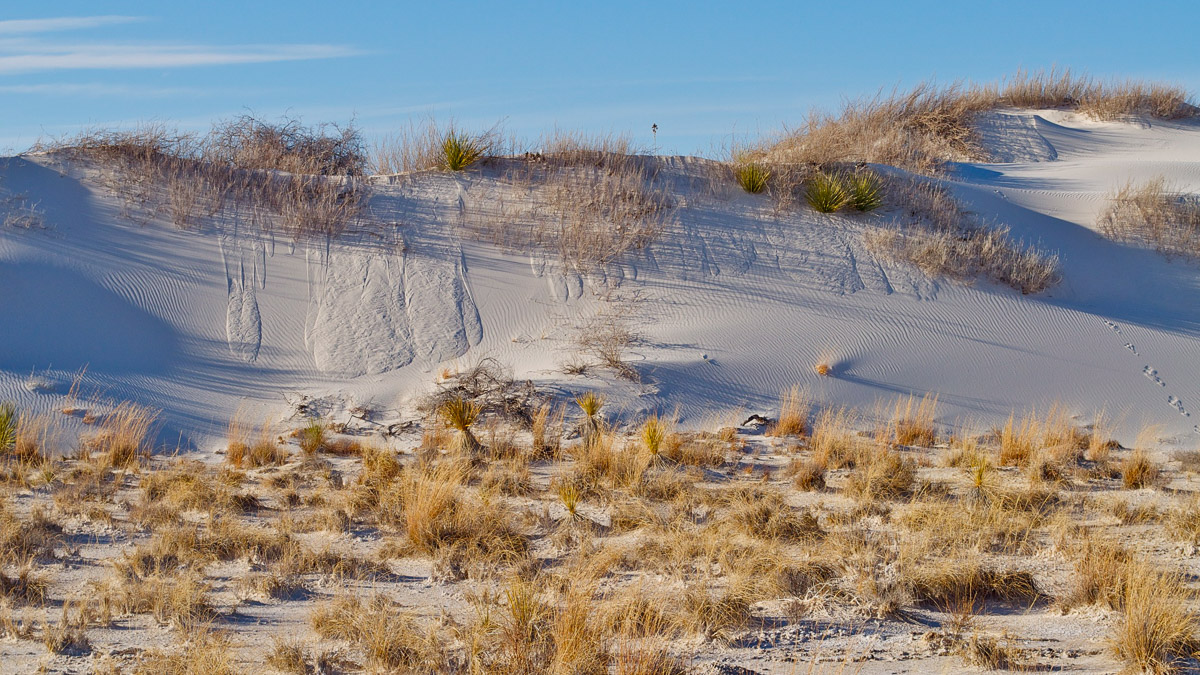

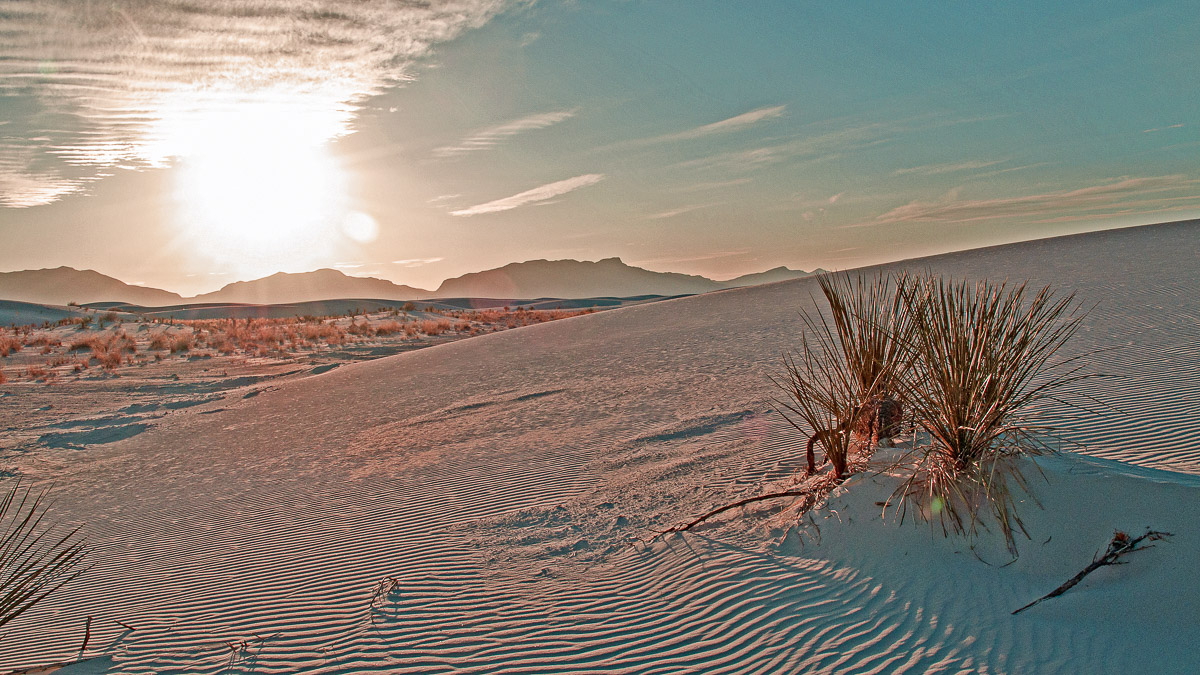
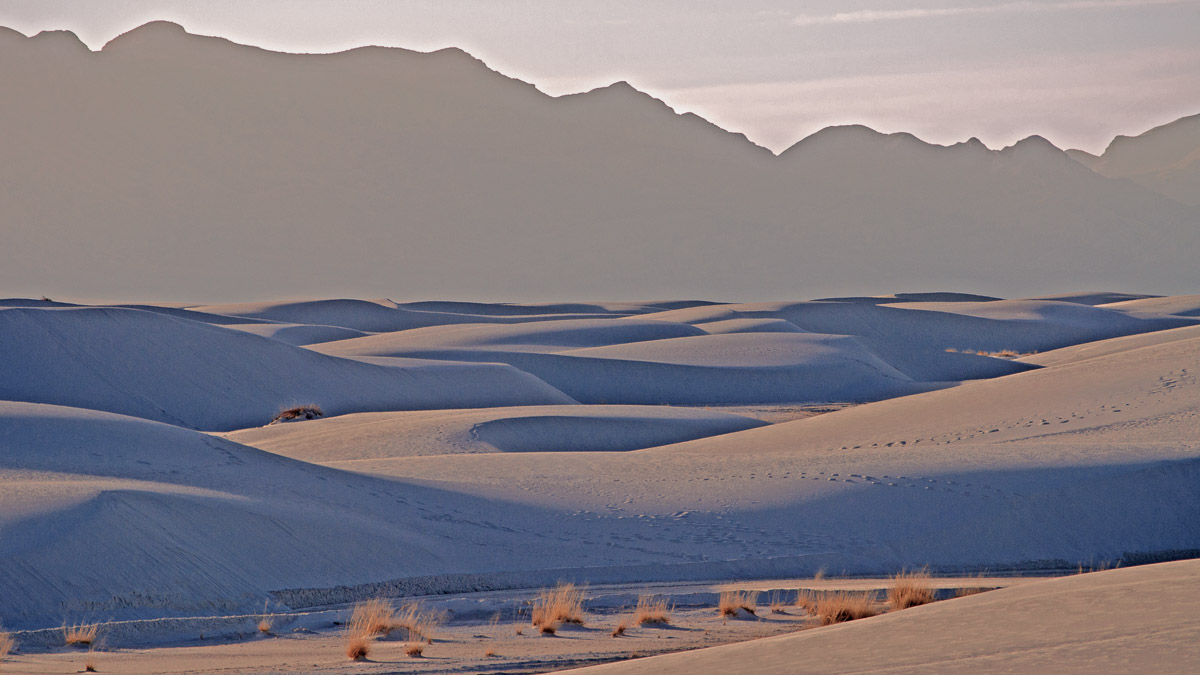
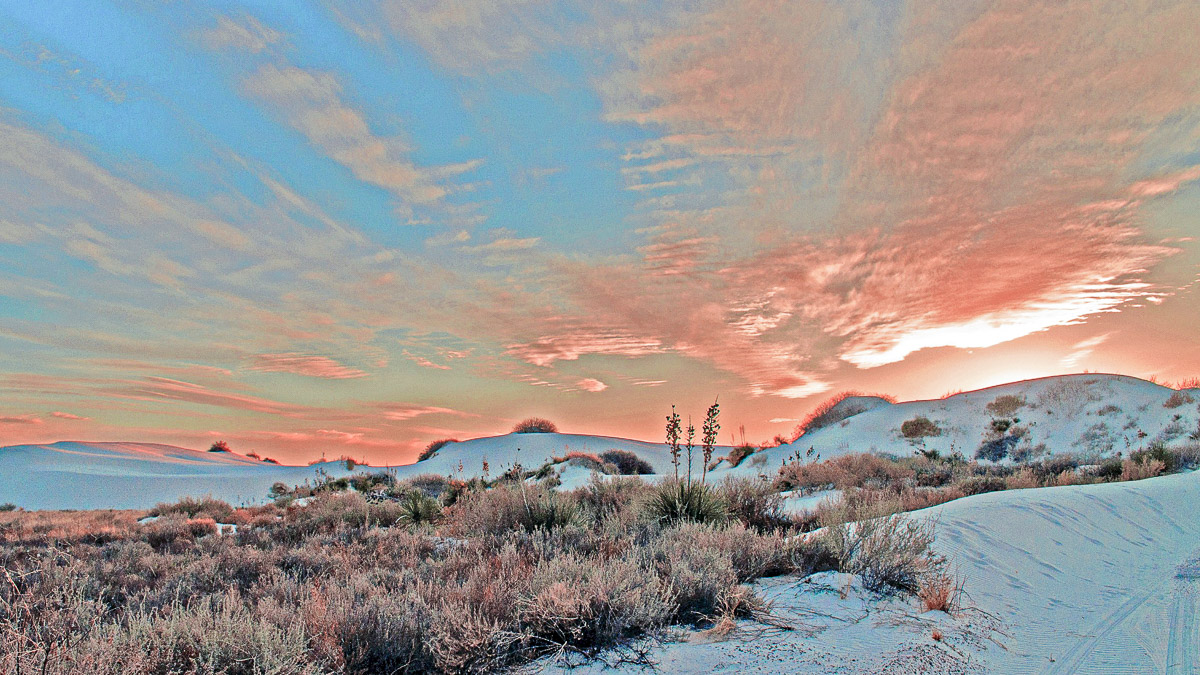


Other attractions in the area include the New Mexico Museum of Space History (more photographs), an IMAX theatre showing a brilliant story about the Hubble Space Telescope, and a Planetarium. There is also a National Solar Observatory just south of Cloudcroft. At the north end of White Sands Missile Range is the ground zero site of the very first atomic bomb detonation, which, on July 16th 1945, ushered in the atomic age.
Outside the Space History Museum is a Space Park and Astronaut Memorial Garden dedicated to the seven astronauts who perished in the Challenger Space Shuttle disaster in 1986. Such is the quality of this facility that 28 countries participated, providing artifacts and exhibits on man’s conquest of space.
From all of the above, it is no wonder that our pre-planned 1-night stop for Heather and me in Alamogordo quickly became a two-week visit to this fascinating area. Who would imagine that this area was the stomping ground of such well-known figures from our history books as Billy the Kid, Pat Garrett, and Indian legend Geronimo?
And to extend that last fact, we broke camp (again) and headed 65 miles southwest for Las Cruces, where the New Mexico Heritage Museum was holding two ‘cowboy’ days – couldn’t wait!!! That trip took us over the strange-looking Organ Mountain range and down the longest, straight downhill run we have experienced – it must have been around 10 miles long…..In my billy-karting days as a 10-year-old kid….Well, I can only dream, ha ha!
~~~~~~~~~~~~~~~~~~~~
For the last year or so of owning our truck and fifth-wheel recreational vehicle, I had concluded that a few modifications to the rig were in order.
We had been venturing into some decidedly cool—as in cold!—areas of the great northwest of this country. After many below-freezing nights spent relying on our furnace and electric fan heaters to stay comfortable, it became clear that our rig lacked insulation. This country, we realised, was far colder than our native Australian climate. The floor, in particular, was icy, and with thirteen single-glazed windows, there was no doubt that our ability to keep the cold out was somewhat compromised.
As a retired builder—and a confirmed do-it-yourself kind of guy—I realised I needed to step out of my ‘retiree’ frame of mind and make a few changes.
The first project was to install double glazing throughout the entire coach. Thirteen windows, each fitted with plexiglass, with 10mm nylon tubing around the cut edges to seal the air space between the double glazing. Simple in theory… though it turned out to be a project with a few unexpected challenges along the way.
Double Glazing for the Fifth Wheel
The second project was to make a vinyl “skirt” for the entire fifth wheel, something that would clip around the perimeter and peg down to the ground, helping to keep the cold out from beneath the floor. It would need hems, fastenings, and a series of zips to allow access to lockers, stairs, and other essentials. I would also employ a small electric fan heater to remove the chill in the enclosed area.
A straightforward sewing job… or so I thought.
I needed a heavy-duty sewing machine for this one.
Heather said no.
Her expertise—and her sewing machine—were both out of bounds.
I tried, “You’ll be much warmer.”
Still no.
So, like any determined do-it-yourselfer, I set about finding an alternative…To Heather’s sewing machine!
See how I built the RV skirt here
Your thoughts or reflective comments are welcome and encouraged